
BIM CREATES
VALUE WITHIN
THE PROJECT.
NOT WITHIN
THE MODEL.
It structures information, coordinates disciplines and supports reliable decisions, from engineering through to operations.

STRUCTURE
INFORMATION.
DE-RISK
THE PROJECT.
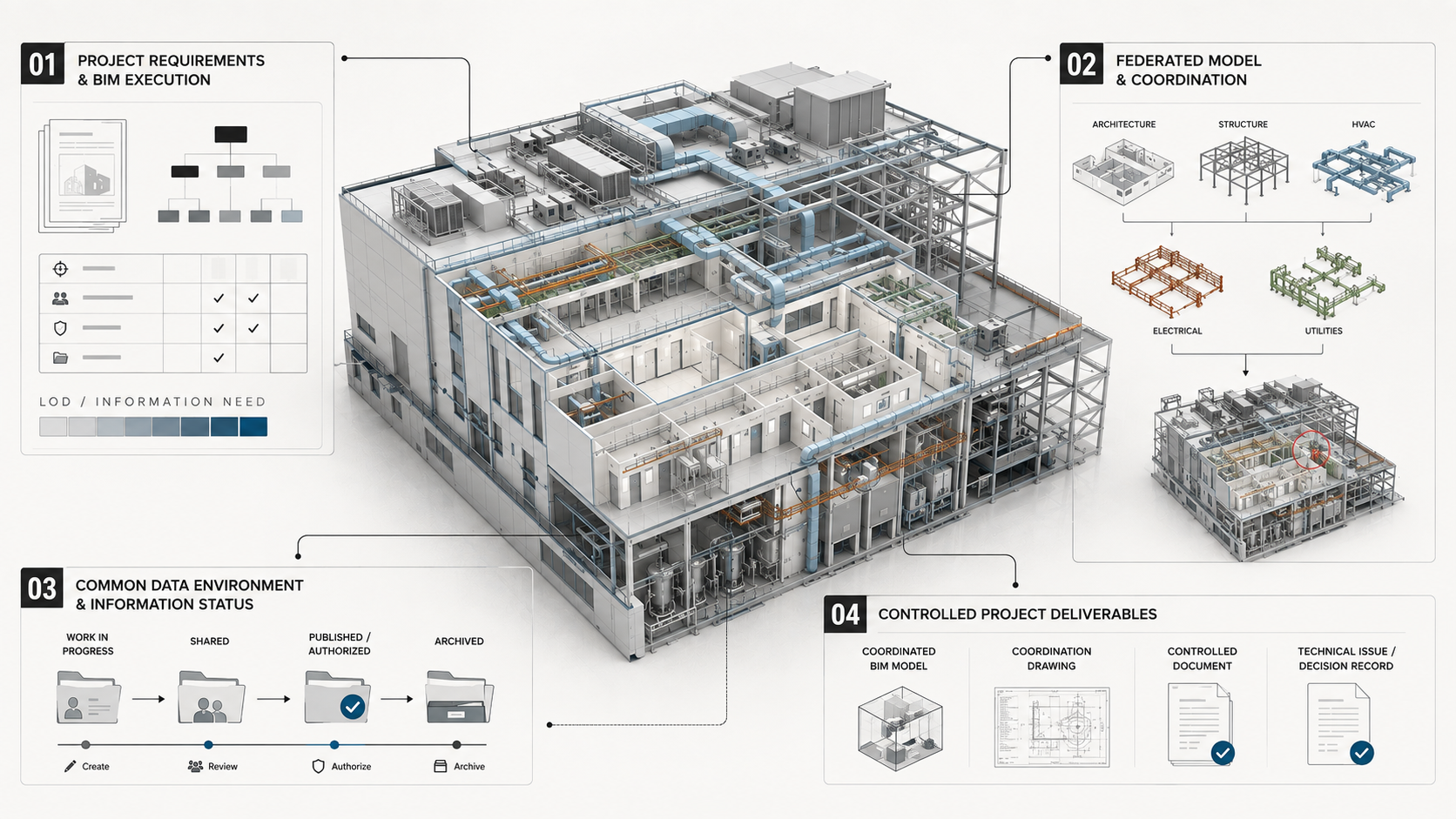
BIM Management provides a common framework for models, data, responsibilities and deliverables throughout the project.
The objective is simple: enable teams to coordinate, validate and make decisions based on reliable information, from engineering through to execution.
STRUCTURE.
Define the requirements, models, data and level of information expected at each stage of the project.
COORDINATE.
Organise responsibilities, discipline interfaces, production rules and reviews around a common project environment.
CONTROL.
Control statuses, approvals, versions and distribution so that decisions are based on reliable information.
TO EXECUTION
INFORMATION
DESIGNED TO
BE USED.
BIM models, coordination drawings, controlled documents and project decisions: deliverables must remain consistent with the information that has actually been approved.
THE MODEL
CREATES VALUE
WHEN THE
DISCIPLINES
WORK TOGETHER.
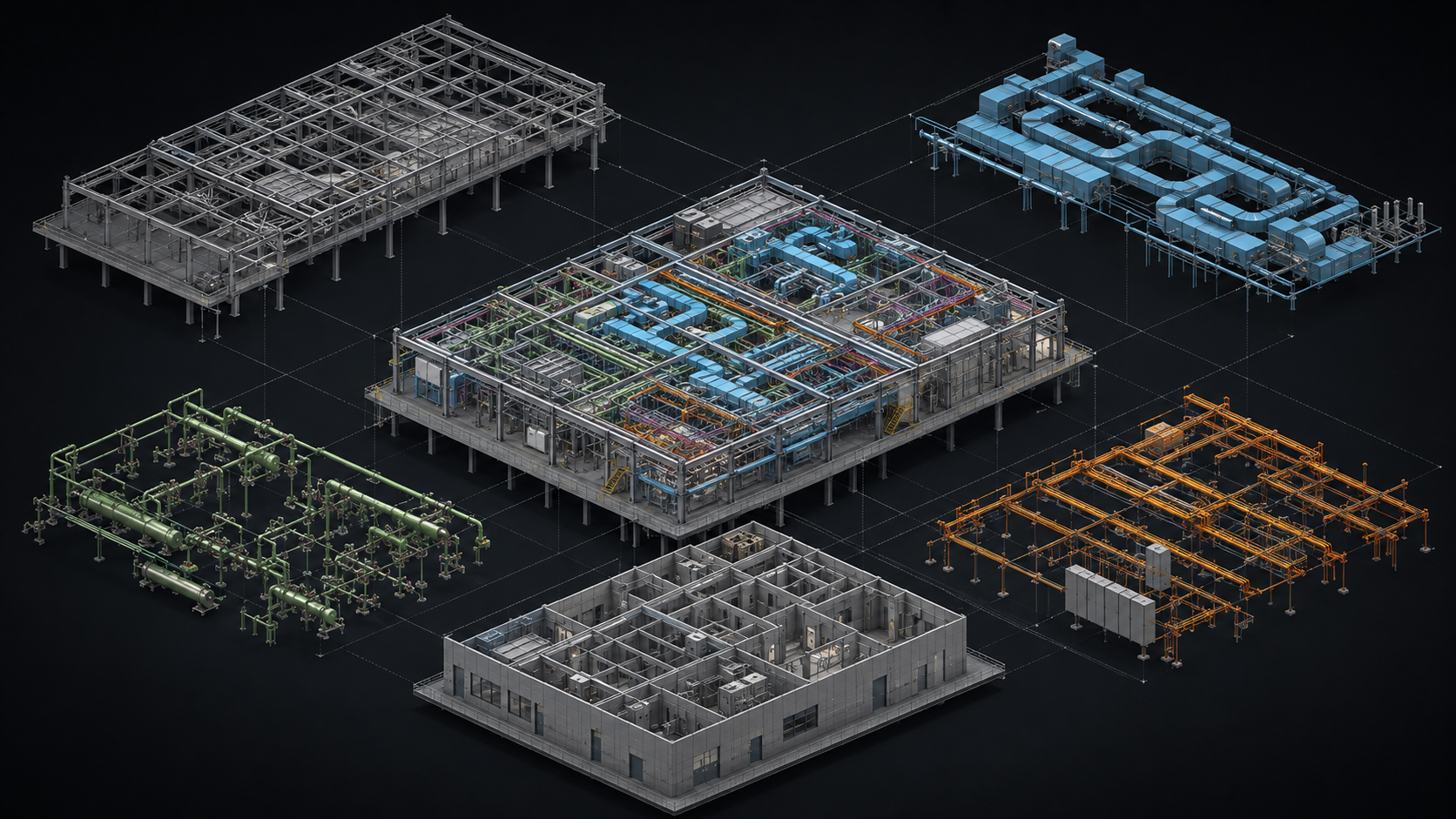
It means bringing discipline models together, making interfaces visible and addressing decisions early enough to de-risk the design and prepare for execution.
VIEW.
UTILITIES
INSTRUMENTATION · AUTOMATION
EQUIPMENT
FINISHING
STRUCTURAL
MODEL →
IDENTIFY.
Make visible the areas where services, spaces, equipment, routes and access requirements interact.
DETECT.
Identify geometric clashes, insufficient clearances and layout incompatibilities.
RESOLVE.
Address trade-offs during engineering, while solutions can still be adapted and controlled.
VALIDATE.
Verify consistency, accessibility, constructibility and compatibility with actual field conditions.
EARLIER. CORRECT
LESS LATER.
INTERFACES
Fewer inconsistencies carried into execution.
DECISIONS
Make decisions while solutions can still be adapted.
EXECUTION
Integrate constructibility, accessibility and field conditions.
INFORMATION
THAT FOLLOWS
THE PROJECT.
FROM ENGINEERING
TO OPERATIONS.
Approved drawings, models and data support execution so that teams can work with consistent, usable information.
The field then enriches this information: deviations, decisions and approved changes are fed back into the project through to the as-built stage, creating a useful foundation for operations.

FOLLOWS
THE PROJECT.
APPROVED
INFORMATION.
Coordinated models
Approved drawings
Project data
AGAINST ACTUAL
SITE CONDITIONS.
Actual conditions
Field verification
Execution interfaces
APPROVED
CHANGES.
Resolved deviations
Approved modifications
Traceable decisions
WHAT WAS
ACTUALLY BUILT.
Final documentation
Consolidated data
As-built condition
USABLE
INFORMATION.
Operational data
Maintenance & interventions
Facility changes
Information produced during the project retains its value when it remains structured, traceable and usable after handover.
BIM IS NOT
AN END IN ITSELF.
IT IS A LEVER
FOR BETTER
PROJECT CONTROL.
A PROJECT TO
STRUCTURE,
COORDINATE
OR DE-RISK?
The right level of BIM depends on the project, its interfaces, its organisation and the decisions that need to be made more reliable.
We start by discussing your actual constraints in order to define an approach that is useful, proportionate and directly usable by the project teams.
LET’S DISCUSS YOUR PROJECT →